
We Are Suffering”: Kenyan Uber and Bolt Drivers Cry Out Over Low Earnings, High Costs and Tough Working Conditions
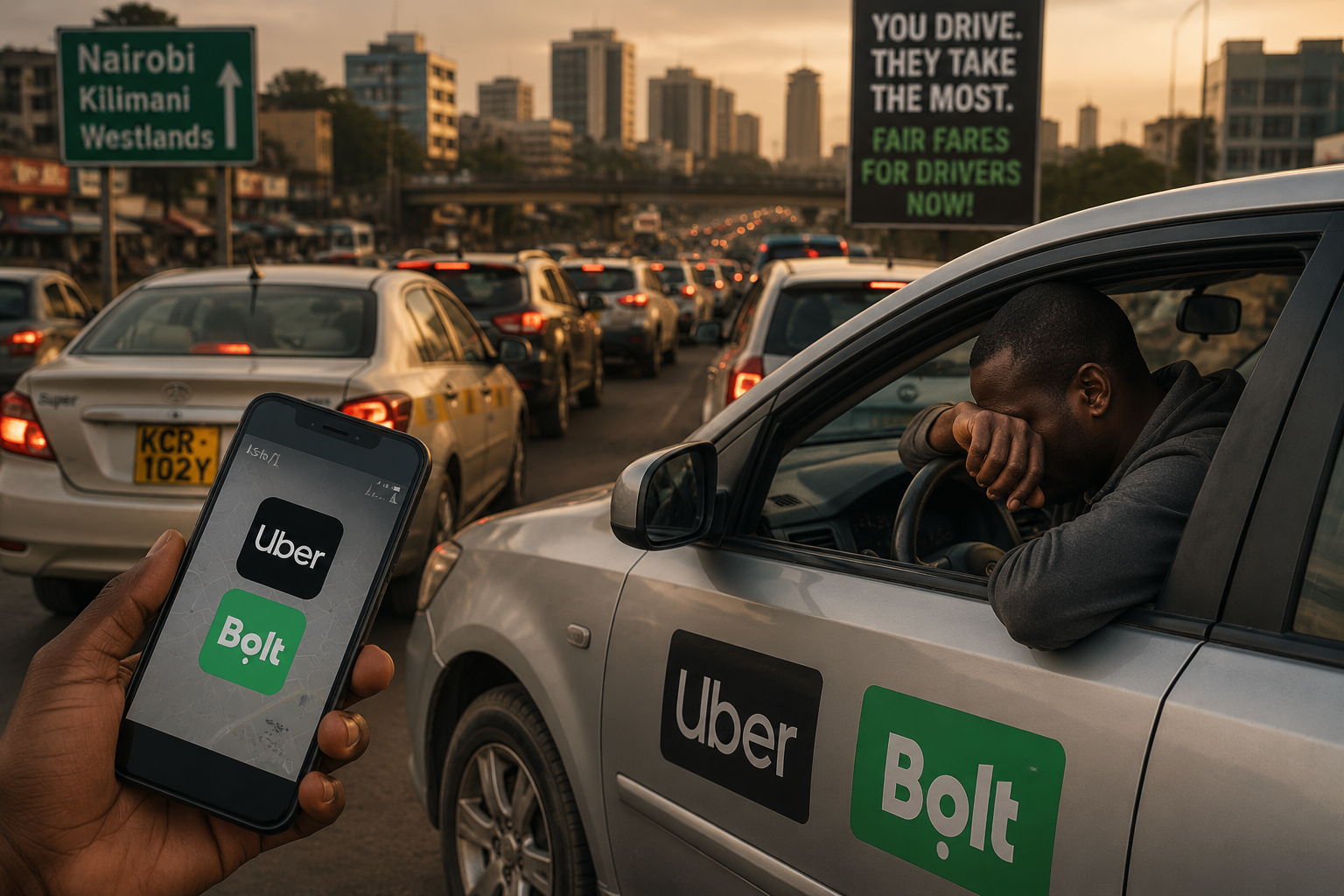
Man shares his heartbreaking experience from online taxi apps in Kenya. Speaking to Cyprian Nyakundi, the man stated that drivers working under popular ride-hailing platforms such as Uber and Bolt are silently suffering despite many Kenyans believing that online taxi business is highly profitable.
According to the driver, the reality on the ground is completely different from what many customers see daily while booking rides through their phones. He claimed that most drivers are struggling with high operational costs, low earnings, long working hours and increasing pressure from the apps, leaving many financially exhausted and emotionally drained.
The driver explained that while customers may assume drivers make huge profits from every trip, a large percentage of the money earned goes directly into expenses before a driver can even take anything home.
He gave an example of a trip covering around 22 kilometres that pays approximately KSh 880. From that amount, he alleged that the platform immediately deducts around 21 percent commission before the driver considers fuel, engine oil, tyres, servicing, insurance, parking fees, car wash expenses, NTSA compliance costs and loan repayments.
According to him, by the time all expenses are deducted, very little money remains for personal use or supporting a family.
The driver further claimed that one of the biggest frustrations in the industry is the continued reduction of fares despite the rising cost of living in Kenya. He stated that fuel prices continue increasing while vehicle spare parts, mechanics and routine maintenance are becoming more expensive every day.
He alleged that despite these economic challenges, ride-hailing companies continue lowering trip fares, forcing drivers to work longer hours just to survive.
Nairobi Traffic Making Work Even Harder
The man also raised concerns over Nairobi traffic, saying that drivers spend hours stuck on congested roads while the apps continue calculating fares using systems that do not fully reflect the delays experienced during peak traffic hours.
According to the statement, some trips can consume two or more hours due to traffic congestion, yet the fare remains almost unchanged while fuel continues being consumed.
Another issue highlighted was what drivers commonly refer to as “dead mileage.” The driver explained that in many cases, drivers travel long distances to pick up customers, but passengers only pay from the official pickup point.
For example, a driver may travel from areas such as Kilimani to Ruaka just to pick up a passenger, meaning the fuel used before the journey officially begins comes entirely from the driver’s pocket.
He stated that many drivers feel this system heavily disadvantages them because they absorb most of the operational risks without proper compensation.
Drivers Speak About Mental and Financial Pressure
The driver also described the emotional and mental toll that comes with working in the online taxi industry. According to him, many drivers wake up very early and return home late at night while chasing enough trips to cover daily expenses.
Some reportedly work between 14 to 16 hours every day in order to make enough money for fuel, rent, school fees and vehicle maintenance.

He warned that the pressure is becoming too much for many drivers, with some reportedly experiencing stress, depression and burnout due to financial struggles and uncertainty within the sector.
Another major concern raised involved account suspensions. The driver alleged that some passengers make false complaints against drivers, leading to immediate suspension of accounts without proper investigations.
He claimed that drivers are rarely given an opportunity to explain their side of the story because most systems are automated and controlled digitally.
According to him, once an account is suspended, a driver can remain offline for several days or even weeks, resulting in loss of income while expenses continue accumulating.
Drivers Demand Fairness From Ride-Hailing Apps
The man also criticized what he described as unrealistic incentives offered by ride-hailing apps. He claimed that some bonus targets are almost impossible to achieve unless drivers overwork themselves beyond safe limits.
He alleged that the platforms continue pushing drivers to complete more trips while paying lower fares compared to previous years.
The driver further argued that online taxi drivers carry the biggest burden within the industry because they purchase the vehicles, fuel them, repair them and take loans independently, while the companies continue collecting commissions from every completed trip.
According to him, if a vehicle breaks down or a driver falls sick, the platforms do not assist with repair costs, medical expenses or financial support.

He claimed that many drivers now feel abandoned and treated as disposable workers despite being the backbone of the entire ride-hailing business.
The statement comes at a time when frustrations among ride-hailing drivers in Kenya continue growing, with some drivers calling for better treatment, fairer commissions and improved working conditions.
The driver concluded by saying that the concerns raised are not only personal frustrations but reflect the experiences of thousands of drivers across Kenya who feel overworked, underpaid and ignored within the industry.
He maintained that many drivers are now demanding dignity, fairness and respect from the companies they work with, arguing that without drivers, ride-hailing platforms would not function at all.